Cycling glasses: road, MTB and photochromic


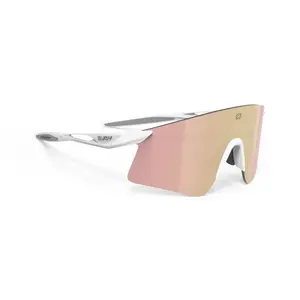


Cycling glasses protect your eyes from the sun, the wind, insects and flying debris. Choose the filter category according to the light, a photochromic lens if you often go from shade to full sun, and a wraparound frame that stays in place. Spare lenses, prescription inserts and accessories complete the selection, alongside versatile sunglasses.
Why wear cycling glasses?
On a bike, your eyes are constantly exposed: the wind created by your speed dries them out and makes them water, insects and grit thrown up by the wheels can injure them, and a low sun dazzles you just when you need to read the road. Cycling glasses wrap around the face to cut the wind and protect against UV radiation. In grey weather or under trees, a clear or contrast-enhancing lens plays the same shielding role without darkening your vision.
Filter categories: which one for which light?
The EN ISO 12312-1 standard classifies sunglass lenses into five categories, from 0 to 4, according to the amount of light they filter. Glasses sold in the European Union carry the CE mark and state their category in the instructions.
- Category 0: clear or very lightly tinted lens, for night riding, fog or woodland trails on a mountain bike.
- Categories 1 and 2: for an overcast sky or changing light.
- Category 3: the most common for full sun.
- Category 4: reserved for high mountains and glaciers; the instructions state that it is not suitable for driving and road use, and therefore not for cycling.
Photochromic or interchangeable lenses?
A photochromic lens darkens under UV light and lightens in the shade: the same pair goes, for example, from category 1 to category 3, or even from 0 to 3, over a ride that alternates between forest and full sun. How quickly it reacts depends on the amount of UV and on the temperature. Interchangeable lenses offer versatility in another way: you change lens according to the weather, and spare lenses also let you replace a scratched lens without changing the frame.
Road, MTB or gravel: which frame should you choose?
On the road, with your head down in an aero position, a large lens whose top edge does not cut across your field of vision is the most comfortable. On a mountain bike, the priority is coverage against mud and branches, a clear or contrast-enhancing lens for woodland and compatibility with your helmet; models geared towards off-road riding are also presented in MTB glasses. For gravel, a photochromic pair covers the changes of light on a long ride, as gravel glasses show. In every case, adjustable nose pads and arms prevent slipping, and vents limit fogging. Children have models in their size.
Other protective gear for cyclists
On a mountain bike, knee pads and elbow pads protect you from falls on descents. On the road, hi-vis vests make you visible from a distance. Everything is gathered in cycling protection.
Cycling glasses brands
Rudy Project, a sports eyewear maker from Treviso, produces its glasses in the Veneto region; its ImpactX photochromic lenses equip models such as the Cutline or the Spinshield, and a prescription insert slides in behind the lens to correct your vision.
Pit Viper embraces a retro style with large wraparound frames, offered in a standard width or a Wide version for broader faces, some with photochromic lenses such as The Midnight.
Bollé, a French sports eyewear brand, derived its Chronoshield from its Chrono ski goggle and offers it with Phantom photochromic lenses, with an anti-fog treatment applied directly to the lens.
AZR, a French brand based in the Drôme, offers Kromic photochromic glasses, such as the Kromic Race RX, compatible with a prescription insert, and models for children such as the Pro Race.
KOO, the eyewear line of the helmet maker Kask, based in Bergamo, fits Zeiss lenses to all its frames, such as the Alibi, the Spectro or the Demos.
Bliz designs lightweight Grilamid frames with adjustable arms and nose pads, such as the Matrix, designed for cycling as well as cross-country skiing, and the Fusion, whose spare lenses come in several tints.
Cycling glasses on sale
The seasonal sales come just ahead of the fine weather and its long rides. Frames and lenses from previous collections go into cycling protection clearance, and the latest pairs listed into new arrivals.
Frequently asked questions
Can you get prescription cycling glasses?
Yes, in two ways. A prescription insert, corrective lenses mounted on a small frame, clips in behind the lens of certain models. Other frames take corrective lenses cut directly by an optician. Check that the frame is compatible before buying.
Which category should you choose to ride in all weathers?
A category 1 to 3 photochromic lens covers most rides, from a grey morning to the midday sun. If you mainly ride in full sun, a category 3 is enough; for woodland or night riding, keep a clear lens.
Are category 4 glasses suitable for cycling?
No. Their instructions state that they are not suitable for driving or road use, because they filter too much light to read the contrasts and bumps of the road surface. They are reserved for high mountains and glaciers.
How do you stop your glasses fogging up?
Choose a ventilated frame and an anti-fog lens, and do not push your glasses up onto your forehead or into your helmet vents on a climb, where the heat fogs them up.
How do you look after your cycling glasses?
Rinse the lenses with clean water to remove dust and sand, then dry them with a clean microfibre cloth, never with kitchen roll. Avoid solvents, which damage the coatings, and keep the glasses in their case or pouch between rides.