
Black Friday bike pedalling: discounts on cranksets
The Black Friday cycling pedal offers discounts on the components that transfer your effort to the chain: cranks, chainrings, bottom brackets, pedals, cleats, and power sensors. All depend on specific standards, frame type, bottom bracket axle, chainring attachment, cleat system: note these on your bike before comparing the discounted prices during the event.
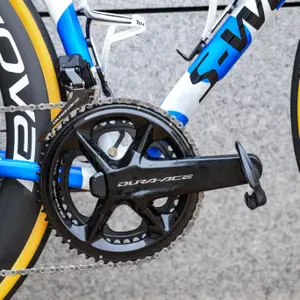
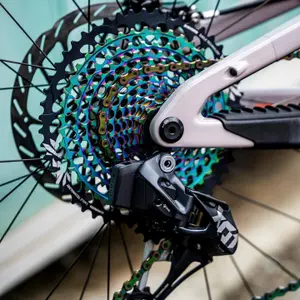
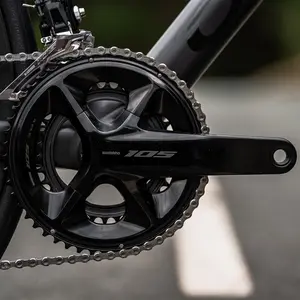
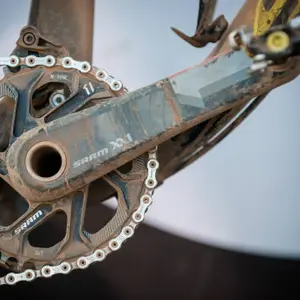
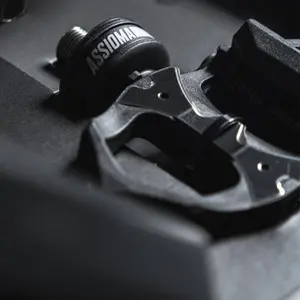
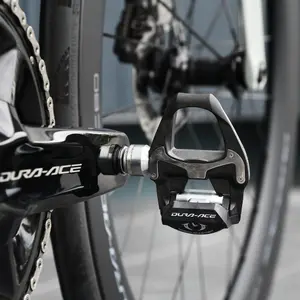
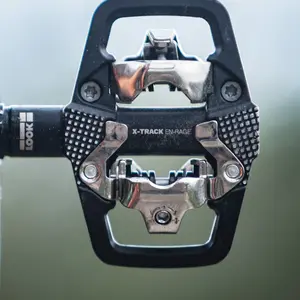
What does the Black Friday of pedalling include?
Seven pages share the section. Complete cranksets combine cranks and chainrings; chainrings and cranks can also be replaced individually. Bottom brackets hold the axle in the frame. For your feet, pedals and cleats come in pairs, while power meters can fit into the pedal, crank, or chainring.
Crankset, bottom bracket, and chainrings: a matter of standards
The bottom bracket depends on the frame: threaded, in the English format of 68 or 73 mm wide, or T47, or pressed in, like BB86, BB92, or BB386EVO. It also depends on the axle diameter: 24 mm on a Shimano Hollowtech II, 30 mm on a FSA BB386EVO, and just under 29 mm on a Sram DUB. For a chainring, there are three criteria: the mounting, by bolt spacing or direct mounting, the tooth profile, and compatibility with your number of gears. Finally, crank length, usually between 165 to 175 mm, remains consistent between cranksets unless there’s a specific reason.
Pedals and cleats: the system before the brand
On the road, automatic pedals use three-bolt cleats, with Look Keo or Shimano SPD-SL systems, which are not interchangeable. In MTB and gravel, the two-bolt SPD cleat fits into a treaded sole that allows walking. Float, indicated in degrees, permits heel movement: a fixed cleat suits well-aligned feet, while a floating cleat spares the knees on long rides. Flat pedals, with pins for MTB or a non-slip surface for the city, do not need cleats.
Power meters: where to place the measurement?
A sensor in the pedal easily moves from one bike to another; in the crank or crankset, it requires the correct bottom bracket standard. A measurement from only the left leg doubles the recorded value, while a dual measurement distinguishes the effort from each leg. For the rest of the year, the bike pedalling section details each family; clearance items go to clearance, with new arrivals listed under new products.
Promotions on pedalling: compare what can be compared
On a crankset, a discount is comparable when the crank length, tooth profile, and axle standard are identical; on pedals, with the same cleat system, checking if cleats are included. For a power meter, a measurement from one leg and a dual measurement are not the same product: a discount on the Assioma UNO cannot be compared to the price of the Assioma DUO. Read the complete reference on the product sheet before weighing two displayed prices.
Which pedalling brands during the Black Friday?
Favero, the Italian manufacturer of Arcade, focuses on the sensor pedal: Assioma DUO for double measurement, UNO for left-side measurement, PRO MX with SPD cleat, and PRO RS for the road.
Shimano provides the chainrings for its groups, from 105 to Dura-Ace through GRX, and its bottom brackets for Hollowtech II cranksets.
Look, a manufacturer from Nevers and the origin of the spread of automatic pedals in the peloton, is present with its Keo, Keo Blade Power with sensor, and X-Track for MTB.
Stronglight, a manufacturer from the Saint-Étienne region, offers the Impact crankset in double or triple chainring and chainrings made of aluminum 7075 for Bosch or Yamaha motors.
FSA, which stands for Full Speed Ahead, offers K-Force and SL-K cranksets with a 30 mm axle and BB386EVO, BB92, or Megaexo bottom brackets.
Sram incorporates Quarq measurement into its cranksets, from Rival D1 to Red AXS versions, for both road and gravel.
Frequently Asked Questions
How do I know the bottom bracket of my frame?
The technical sheet of the frame indicates this. If not, measure the width of the bottom bracket shell and check whether the cups are threaded or pressed in: a threaded bottom bracket will show flats or notches for the key.
Can I mount a chainring from another brand on my crankset?
Yes, if the mounting matches, bolt spacing and number of bolts or direct mounting, and if the chainring is designed for the number of speeds of your chain. Chainring manufacturers specify compatible cranksets.
Do Look Keo cleats fit on Shimano pedals?
No. Both systems use three bolts on the shoe, but the shape of the cleat differs: each pedal requires its own cleats, which should be changed as soon as their contact surface is worn.
Is a power meter on one leg sufficient?
For monitoring your training and calibrating your efforts, yes in most cases, as long as you keep the same sensor to compare sessions. Measuring both legs provides a more detailed analysis if you're looking for an imbalance.
When can I benefit from Black Friday discounts on pedalling?
Its name refers to the Friday after Thanksgiving, but Vélo-Store keeps its discounts on cranksets, pedals, and sensors throughout November. Use this time to check the bottom bracket: a crankset whose axle does not match the previous one also requires a new bottom bracket, which is advised anyway when the bearings become loose.