Bike torque wrench and Allen keys


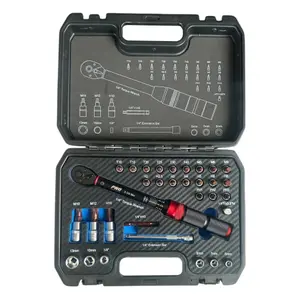


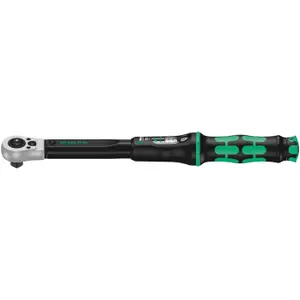


A torque wrench for bikes tightens each screw to the torque specified by the manufacturer, an essential precaution for carbon and useful everywhere else. Choose its range based on the screws to be tightened: a few newton-metres for the handlebars, much more for the cassette or the bottom bracket. Allen keys, Torx, spoke and cone wrenches complete the tightening tools.
Why use a torque wrench on a bike?
Every screw on a bike has a torque value, indicated in newton-metres on the part or in its manual. If it’s too tight, the screw can crush a carbon handlebar or seat post, distort a clamp, or strip its threads in aluminium; if it’s not tight enough, the part can slip or come loose. A torque wrench replaces guesswork with a measured value: you tighten until it clicks, and you know the part will stay secure without being damaged.
What torque range to choose?
Stem, handlebar, seat clamp, and extension screws are usually tightened between about 4 and 10 Nm: a small wrench that tops out at 10 or 20 Nm, compact and precise at these values, will cover them. The cassette, bottom bracket cups, pedals, or crank bolts require several tens of newton-metres: a larger wrench with a wider drive square is needed for those. A wrench is most accurate in the middle of its range, so having two complementary models is useful to cover the entire bike.
Trigger, fixed torque or display: types of wrenches
- Click wrench: you set the value, and the wrench releases with a click when it is reached. Return it to its lowest setting after use, as most manuals recommend.
- Fixed torque wrench: pre-set to a value, often 4, 5, or 6 Nm, it avoids any adjustment and is suitable for the screws on the cockpit.
- Direct reading wrench: a scale or display indicates the torque applied during tightening.
Allen, Torx, and socket wrenches: the sizes you need
The Allen wrench, or hex wrench, is the most commonly used tool on a bike: sizes 4, 5, and 6 mm appear everywhere, while 2, 2.5, and 3 mm are used for small adjustment screws, and 8 and 10 mm are for certain pedals, crank bolts, or freewheels. L-shaped wrenches fit in tight spots, while T and Y wrenches save time in the workshop. A ball-end allows you to work at an angle but transmits less force: finish tightening with the straight side. Torx screws are on the rise, with T25 for brake disc screws and T30 for certain chainring screws.
Spoke wrenches and cone wrenches
The spoke wrench turns the spoke nipples to true a wheel or adjust spoke tension: its size, expressed in millimetres or gauge, must match the nipples exactly, and some wheels require a wrench specific to their manufacturer. Cone wrenches, which are very thin, adjust the play of cone and ball hubs while holding the cone during tightening of the locknut. Bottom bracket wrenches and pedal wrenches also have their place among the bottom bracket tools and on the page devoted to crank extractors and pedal wrenches. For must-have items on the go, check out the multi-tools, and for the rest of the toolkit, the bike tools.
What brands of wrenches to choose?
Super B offers a set of eight hex T wrenches, a set of eight Torx wrenches, the TB-TW50 Classic torque wrench, a set of seven cone wrenches, and a 3-in-1 spoke wrench.
Pedro's provides its torque wrenches in three formats, fixed torque, half-torque, and high torque, alongside cone wrench sets and a set of Allen and Torx wrenches pro.
Unior pairs two torque wrenches, 1/4 inch drive from 2 to 24 Nm and 3/8 inch from 5 to 110 Nm, with a set of twelve cone wrenches and a spoke wrench for Mavic R-Sys wheels.
Park Tool, founded in St. Paul, Minnesota, by two cycle shop managers who started by making a bike stand, is here with its 16-notch bottom bracket wrenches and those for Shimano XTR.
Wera, a tool manufacturer from Wuppertal, Germany, offers Click-Torque wrenches from 2.5 to 200 Nm, Zyklop ratchets, Joker combination wrenches, and Bicycle tool kits designed for cycling.
Topeak covers precision tightening with the Torq Stick Pro from 2 to 10 Nm and 4 to 20 Nm, the Nano TorqBar DX, Y-Hex Speed Wrench and DuoHex wrenches, and DuoSpoke spoke wrenches.
Wrenches and torque wrenches on sale
A brand torque wrench lasts a long time: the clearance sale allows you to equip yourself at lower cost, and the new arrivals showcase the latest wrench sets on offer.
Frequently Asked Questions
Is a torque wrench necessary for a carbon bike?
Yes. Carbon does not tolerate over-tightening well, and damage can remain invisible until it breaks. The torque values for handlebar, stem, and seat post screws are low: a small wrench with a low range will do, ideally with a carbon assembly paste.
What sizes of Allen wrenches do you need for a bike?
A set from 2 to 10 mm covers almost everything. Sizes 4, 5, and 6 mm are the most commonly used; add a Torx T25 wrench for the brake discs and check the few special screws on your components.
What torque wrench is needed to tighten a cassette or pedals?
A larger range wrench, reaching several tens of newton-metres, with a 3/8 or 1/2 inch drive square and the necessary adapters. Smaller wrenches of 2 to 20 Nm are not suitable for these tightenings.
Should a torque wrench be recalibrated?
Over time and with use, its accuracy can drift. Store it at its lowest setting, avoid shocks, and follow the manufacturer's calibration recommendations; a dropped wrench or one used beyond its range should be checked.
How to choose a spoke wrench?
Based on the spoke nipples of your wheel: measure them or check the wheel’s documentation. A badly fitting wrench will round them off. Wrenches with multiple sizes are handy, but a wrench with the exact right size will work more effectively.