Bottom bracket tools: keys, presses, taps


Starting at €57.32
€47.25


Starting at €118.90
€101.97

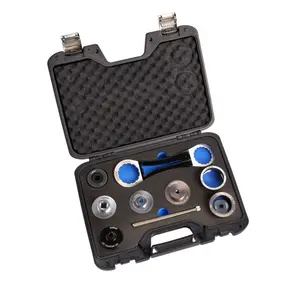

Starting at €99.80
€86.31


Starting at €54.10
€48.84


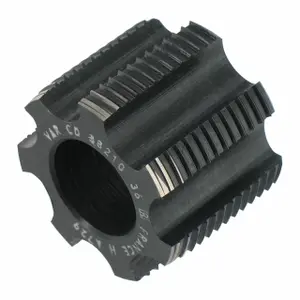
A bottom bracket tool is chosen based on the bottom bracket installed in your frame, not on the crankset. A threaded bottom bracket is unscrewed with a notched key or a splined socket, while a press-fit bottom bracket is removed and then pressed back in. Taps and cutters restore the frame's housing before fitting a new bottom bracket.
What is the purpose of a bottom bracket tool?
The bottom bracket holds the bearings on which the bottom bracket axle rotates. It is replaced when it becomes loose, squeaks, or turns stiff, and it is also removed to change the bottom bracket or clean a frame. Depending on the design, the tool is used to unscrew cups, extract press-fit bearings, press in new bearings squarely, or restore the threads and surfaces of the housing. No tool does it all: each standard has its own.
Identifying your bottom bracket before choosing the tool
Start by determining whether the bottom bracket is threaded or press-fit. A threaded bottom bracket can be a cartridge, which is grabbed by 20 internal splines, or an external cup model, grabbed by 16 notches around its perimeter. These 16-notched cups do not all have the same diameter, ranging from about 39 to 50 mm depending on the brand and range: check the reference engraved on the cup. Campagnolo uses its own profiles.
The thread count also matters. The BSA, the most common, screws in left on the transmission side; the Italian thread screws in right on both sides; the T47, with a diameter of 47 mm and a pitch of 1 mm, follows the direction of the BSA. For press-fit, the names can be confusing: BB86 and BB92 refer to the width of the bottom bracket, for a bore of about 41 mm, while the BB30 fits into 42 mm and the PF30 into 46 mm.
Key, press, or bearing remover: the tool for the bracket
- Threaded bottom bracket with external cups: a key with 16 notches of the correct diameter, to be used with a ratchet key or a torque wrench to respect the torque.
- Cartridge bottom bracket: a socket with 20 splines, wide enough to allow Octalink or ISIS axles to pass through.
- Press-fit bottom bracket: a bearing remover or an extractor with the bore of the bracket for removal, then a press with the rings suited to the axle diameter for reinstallation, keeping the bearings perfectly parallel.
- DUB or BB30 axle: a preload adjustment tool eliminates lateral play without hindering rotation.
Tap and mill: preparing the frame housing
A new frame, repainted, or a bottom bracket that is forcing when screwing in benefits from some preparation. The tap cleans and straightens a thread that is clogged with paint or slightly damaged; for a T47, one tap is needed with a right-hand thread and one with a left-hand thread. The facing mill squares the two faces of the bottom bracket so that they are parallel: external cups that are askew wear their bearings faster. These tools, which are used with cutting oil, are more suited to a well-equipped workshop.
Other tools around the bottom bracket
To remove the bottom bracket, you first need to take off the crank arms: the crank pullers and keys are grouped in the pedal and bottom bracket tools. The mills and alignment tools for the rest of the frame are found in the frame tools, and torque wrenches in the hex keys. All the tools can be accessed from the bike tools.
What brands of bottom bracket tools are available?
Cyclus offers its bottom bracket removers by manufacturer, Shimano Hollowtech II, FSA Mega Evo, Campagnolo, or Miche, several in the snap.in format, and completes the range with a T47 tap and a bottom bracket facing mill.
Var provides HSS taps with right-hand and left-hand threads for restoring a T47 thread, a press, a bottom bracket jaw, and several bottom bracket removers.
Enduro Bearings, a Californian specialist in bike bearings, also manufactures the tools to replace them: bottom bracket presses for 24 mm, BB30, or DUB axles, Pro Cup kit, and preload adjustment tool for DUB and BB30.
Super B offers the TB-BB35, for cartridge bottom brackets with square, Octalink, or ISIS axles, as well as a tool for the crank of Panasonic motors.
Pedro's, which started with a chain lubricant in New England before moving to professional tooling, offers a press that works for both bottom bracket cups and headset cups.
Bottom bracket tools on promotion
Bottom bracket tools sometimes go on clearance when a reference changes; tools for the most recent standards arrive in the new arrivals. The Black Friday remains an opportunity to equip your workspace with a press or a set of taps.
Frequently asked questions
Can you remove a press-fit bottom bracket without a specific tool?
It's better to avoid it. Hammering out the bearings with a makeshift rod could oval or mark the housing, especially on a carbon frame. A bearing remover of the correct diameter presses on the entire ring, and the press repositions the bearings squarely, which no improvised method can guarantee.
How can I tell if my bottom bracket is BSA or Italian?
Look at the marking engraved on the cup: 1.37 x 24 indicates a BSA, 36 x 24 an Italian thread. Without marking, the frame manual or the manufacturer's website will clarify. The issue is the screwing direction on the transmission side, which is opposite between the two standards.
In which direction do I unscrew the cup on the transmission side?
On a BSA or T47 bottom bracket, the cup on the transmission side is left-threaded: it unscrews clockwise. On an Italian bottom bracket, both cups unscrew in the opposite direction, like a normal screw. An arrow engraved on the cup often indicates the tightening direction.
Does a key for external cups fit all brands?
No. External cups almost all have 16 notches, but their diameter varies by brand and range, and some keys come with an adapter. Compare your cup's reference against the compatibility indicated on the tool before ordering.
Do I need to remove the crank arms before the bottom bracket?
Yes, to remove the entire bottom bracket: the bottom bracket axle goes through or rests on it. Depending on the bottom bracket, a crank extractor, a cap key, or a simple hex key for a self-extracting crank arm may be needed. Take the opportunity to check the wear on the chainrings.