Derailleur hanger and frame alignment tool




Starting at €19.73
€16.89


Starting at €39.67
€13.76
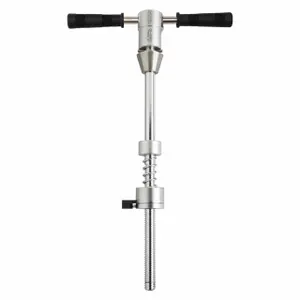
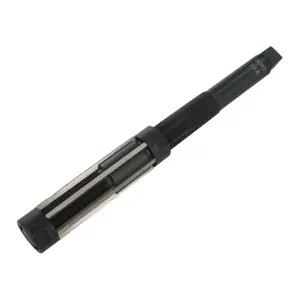






A derailleur hanger alignment tool measures and straightens the hanger that holds the rear derailleur, which is the first suspect when gears skip after a fall. This page also brings together tools that prepare a frame before assembly: frame and fork alignment gauge, head tube reamers and drills, threading taps. Most of these fall under equipped workshop tools.
Why align the derailleur hanger?
The derailleur hanger is purposely designed to bend: during a fall or impact on the derailleur, it’s it that takes the hit, not the frame or the derailleur. Even if it’s slightly misaligned, it throws the derailleur off from the sprockets, and no adjustment of limit screws or cable tension can fix this issue: the gears skip, hesitate, or make noise. Checking the hanger is thus the first step before adjusting a stubborn derailleur.
How does an alignment gauge work?
The gauge screws in place of the derailleur, with the rear wheel in place. Its arm carries an indicator that is brought close to the rim at various points, at the front, the back, the top and the bottom: the gap measured between these positions reveals the tilt of the hanger. You correct first in one plane, then in the other, with small successive bends, measuring again each time. Gauge manufacturers tolerate a gap of only a few millimetres between two opposite points.
Before buying, check that the gauge accepts the diameter of your wheels and, on frames with through axles, the limited clearance of certain hangers. A hanger that has already been straightened several times may break during the operation: having a replacement hanger of the correct model is still the safest option. On a frame where the hanger is integrated, proceed with extreme caution or take the bike to a workshop.
Check the alignment of the frame and fork
After a serious fall, or before assembling a second-hand frame, an alignment checker assesses the symmetry of the rear triangle, the parallelism of the hangers, and the alignment of the fork. A bike that pulls to one side or a wheel that doesn’t centre between the stays may indicate an issue. The check doesn’t tell you everything: the decision to straighten a frame or not depends on its material and the diagnosis of a professional.
Reaming, drilling, tapping: preparing a frame before assembly
- Reamer and headset cutter: the reamer sets the head tube to the exact diameter for fitting cups, and the cutter levels its faces so that the bearings sit flat.
- Frame tap: it cleans a thread clogged with paint or slightly damaged, on a through axle hanger, a bottle cage insert or a brake mount.
- Tap holder: it keeps the tap straight and transmits the force without breaking it.
These tools remove material: they require guides of the correct diameter, cutting oil, and a method, and are mainly used on metal frames, following the manufacturer's recommendations for a carbon frame. The tools for bottom bracket housing are found in the bottom bracket tools, and those for the fork and cups in the headset tools.
Frame parts and other tools
This page also offers spare frame parts, such as hangers, links or adapters specific to certain models: their reference must match exactly the frame and its year. To tighten frame screws to the specified torque, see the hex and torque wrenches, and for all tools, check the bike tools.
Which brands of frame tools to choose?
Var provides the essential frame tools on this page: the Checker, a frame and fork alignment kit, a universal alignment tool for frames and small forks, handheld reamers, a cutter for integrated headset, and taps for through axles.
Cyclus offers the frame hanger alignment tool on this page, which checks then straightens the hanger, and an adjustable tap holder for frame threads.
Frame tools on sale
Frame tools are workshop purchases that are rarely made: keep an eye out for them in the clearance sale, and find the latest tools listed in the new arrivals.
Frequently asked questions
How can you tell if a derailleur hanger is bent?
Look at the transmission from the back, at hub height: the derailleur and its rollers should be in line with the sprockets. An irregular shifting after a fall, which adjustments don’t correct, is another sign. Only an alignment gauge gives a reliable measurement.
Can you straighten a derailleur hanger without a tool?
By hand, you can at best correct a coarse defect, with no precision or control, and you risk breaking the hanger. The gauge uses the rim as a reference and allows for correction in small steps. In an emergency, it's better to carefully align and then straighten at the workshop.
Should you straighten or replace a derailleur hanger?
A slightly bent hanger can be straightened. If it has been bent several times already, shows a crack, or if the defect is significant, replace it: it risks breaking and sending the derailleur into the wheel. Keep a replacement hanger of the correct model, especially when travelling.
Does a new frame need to be reamed?
It’s not always necessary. Most frames come from the factory ready for assembly. Reaming is justified when the faces are covered in paint, when cups fit poorly, or after a repair; it removes material and should only be done following the manufacturer's recommendations.
Can a tap repair a damaged thread?
A tap straightens a clogged or slightly crushed thread by passing through the existing threads. However, a ripped thread requires an insert or a repair by a workshop, as the tap cannot recreate the missing material.