
Bike cassette remover, whip and cassette key
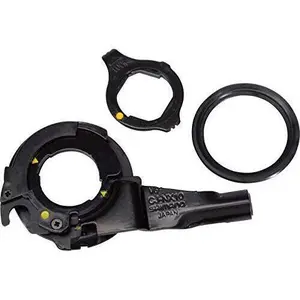
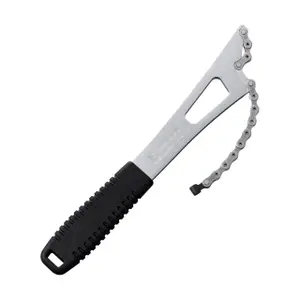
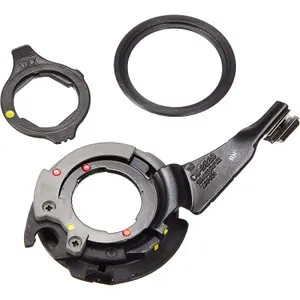
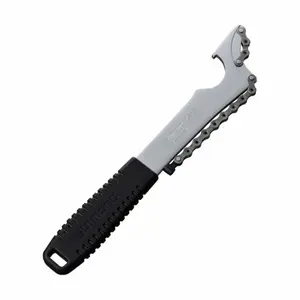
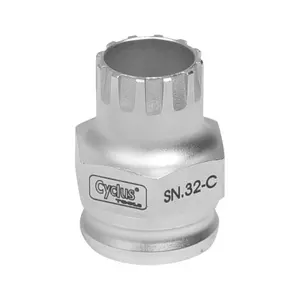
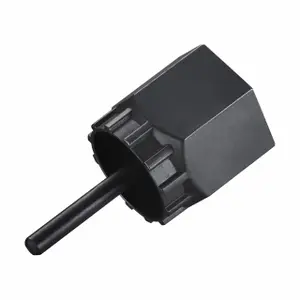
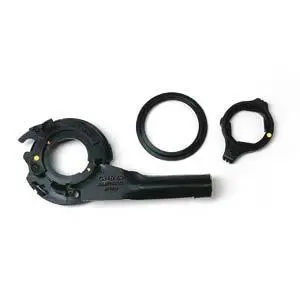
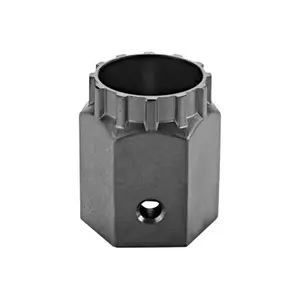
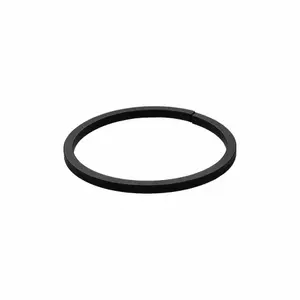
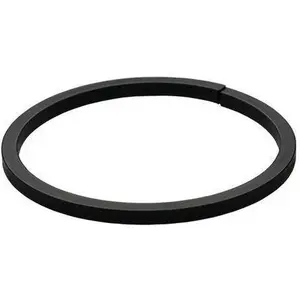
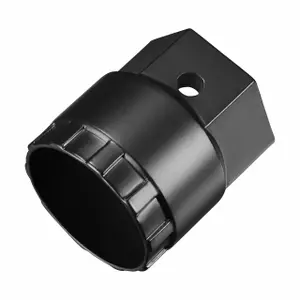
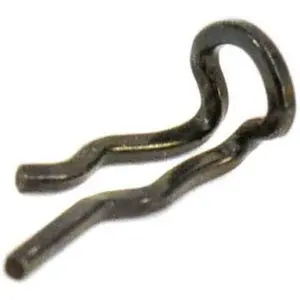
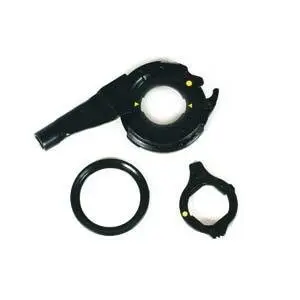
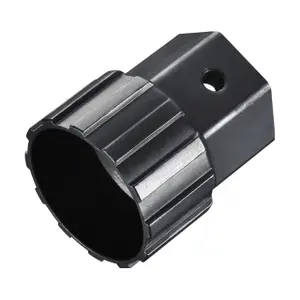
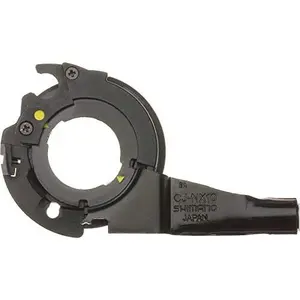
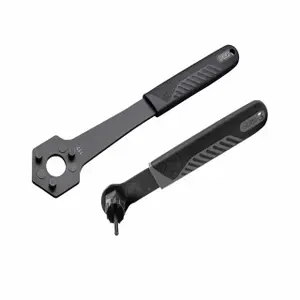
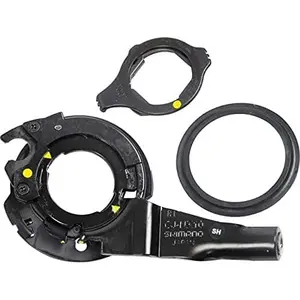
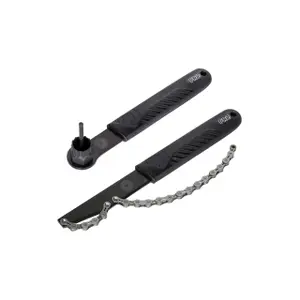
To remove a bike cassette, you need two tools: a cassette lockring tool, which fits into the lockring, and a chain whip that holds the cogs while loosening. The first is chosen according to the shape of the lockring, Shimano and Sram on one side, Campagnolo on the other, while the second is selected based on the number of speeds of the cassette.
When should you remove a cassette?
The cassette is removed for a thorough clean, to replace it when it is worn out along with the chain, to change gearing before a more mountainous route, or to transfer the cassette from one wheel to another. It also needs to be taken off to access the freehub body or the hub parts on the transmission side. The operation is straightforward with the right tools: the locknut is unscrewed, and the cogs slide out of the splines of the cassette body.
Shimano, Sram, Campagnolo: the nut profile to check
The cassette nuts for Shimano and Sram share a 12-spline profile of about 23.4 mm in diameter; Campagnolo retains 12 splines but at around 22.8 mm. An unsuitable tool can slip in the nut and damage it. The Sram cassettes for XD bodies do not have a separate nut: the smallest cog itself carries the splines that the usual cassette tool grips.
Also check your wheel's axle. Some cassette removers have a guide rod that goes through the hub and keeps the tool straight: it measures 5 mm for a quick release and 12 mm for a thru-axle. Without a rod, the tool is handled with a spanner or a socket wrench and requires a bit more attention to avoid slipping.
The chain whip, suited to the number of speeds
When loosening the nut, you turn the cassette in the direction that the freewheel lets it spin: the whip, which is a handle extended with a piece of chain wrapped around a cog, holds it in place. It is not needed during reassembly. A 12-speed cassette has cogs that are closer together, which some whips designed for up to 11 speeds do not grip properly: check the announced compatibility. Tools without a chain, featuring heads with notches that engage a small cog, replace the whip in workshops that frequently change cassettes.
Cassette or screw-on freewheel?
Before buying, make sure your wheel is indeed fitted with a cassette. On older bikes, entry-level models and many electric bikes, the cogs form a screw-on freewheel directly on the hub: it is removed as a whole, without a whip, with a brand-specific spline or notched remover. These tools are found in the freewheel and wheel tools, with the whip and chain breaker in the chain tools.
Reassembling the cassette with the correct torque
When reassembling, align the wide spline of the cassette body with that of the cogs, slide spacers and cogs in order, and then tighten the nut to the torque specified by the manufacturer, often around 40 Nm. A torque wrench prevents a nut that is too loose, which causes the cassette to rattle, or too tight, which marks the freehub body. Cassette bodies, ratchets, and replacement nuts available on this page can restore a hub without needing to change the wheel; all the tools can be found in the bike tools.
Which brands of cassette removers to choose?
Shimano distinguishes the TL-SR23 whip, designed for 6 to 11 speeds, from the TL-SR24, intended for 12-speed cassettes; its TL-LR15 cassette remover, fitted with a guide rod, also works with Center Lock disc nuts.
Cyclus covers current cassettes and older freewheels: tools for Shimano, Campagnolo, and Sachs, Rohloff with 4 notches, Suntour with 2 or 4 notches, and Maillard, Regina, or Atom, several in snap-in format.
Var offers Hyperglide cassette removers, including a Pilot model, and keys compatible with cassettes and freewheels, covering Uniglide and Sachs-Aris standards.
Pro, a brand of components and tools from the Shimano group, provides cassette removal keys that are easy to handle with an open-ended spanner.
Unior, a Slovenian manufacturer of forged tools recognizable by their red colour, offers a chainless remover whose notched head replaces the whip, along with a universal chain model.
Discounted cassette removers
Cassette tools rarely change standards, which makes clearance a good option; new tools, especially for 12-speed cassettes, join the new arrivals. The French Days are also a chance to gear up before the season.
Frequently asked questions
Can you remove a cassette without a whip?
Not with just a cassette remover: without retention, the cassette turns with the tool due to the freewheel mechanism. A tool with notches that grips a small cog can replace the whip. Reassembly, on the other hand, is done without a whip, tightening the nut in the direction that the freewheel locks.
What torque for the cassette nut?
The value is indicated on the nut or in the manufacturer's instructions; it is often around 40 Nm. A torque wrench with an appropriate socket for the cassette remover helps to maintain this, avoiding the rattling of a badly tightened cassette.
How to remove a Sram cassette with an XD body?
The principle remains the same, but the nut is integrated into the smallest cog: the cassette remover fits into the splines of this cog, the whip holds the cassette, and the whole assembly is unscrewed as a unit. No additional specific tool is needed.
Can the cassette remover also be used for Center Lock discs?
Often, yes: Center Lock disc nuts with internal splines, mounted with a quick release, are tightened with the same profile. External notched nuts, common with thru-axles, require a 16-notch key like a bottom bracket tool.
Is it necessary to remove the cassette to change a spoke?
On the transmission side of the rear wheel, almost always: the cassette masks the spoke heads. Take the opportunity to clean the cassette body and check the wear of the cogs, especially the smaller ones.