
Road bike frame Black Friday: 50/34 deals
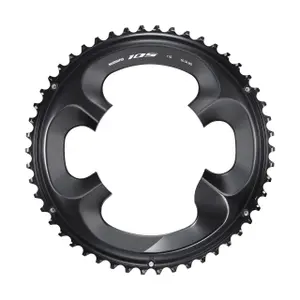
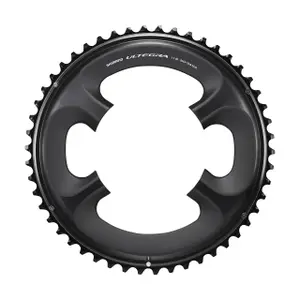
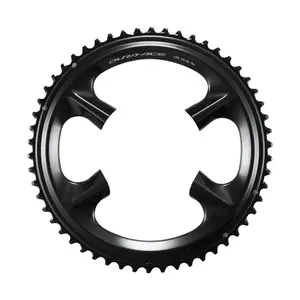
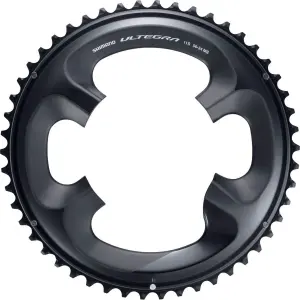
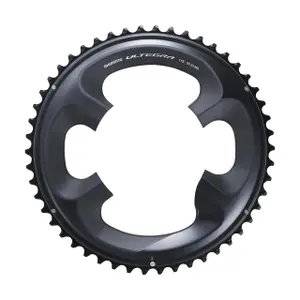
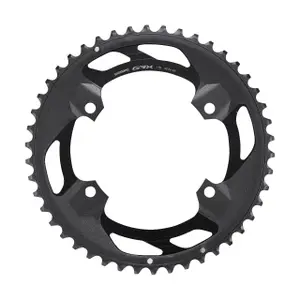
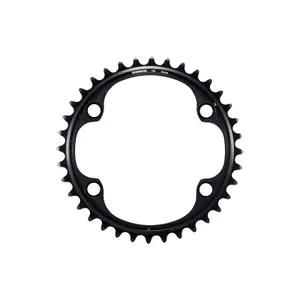
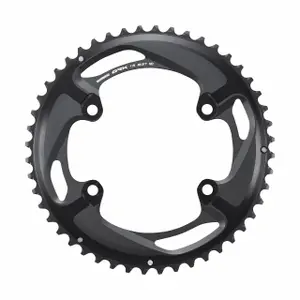

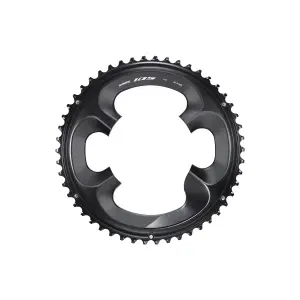

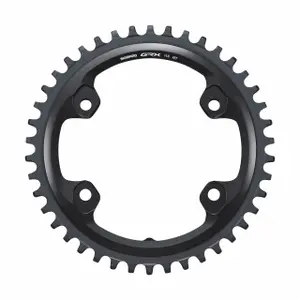
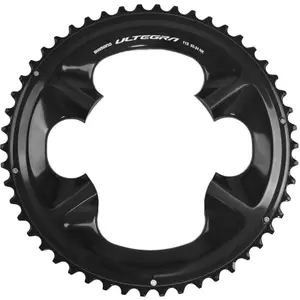
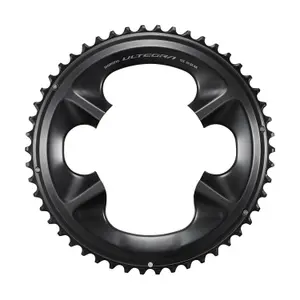
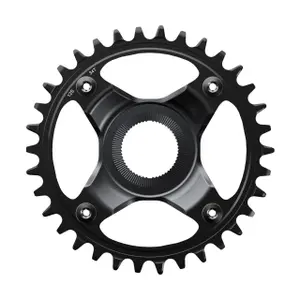
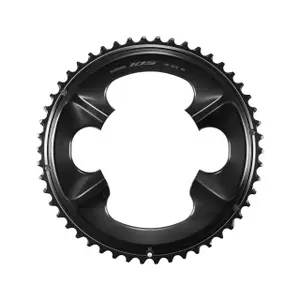
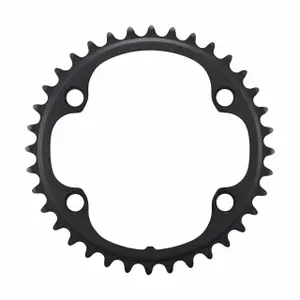
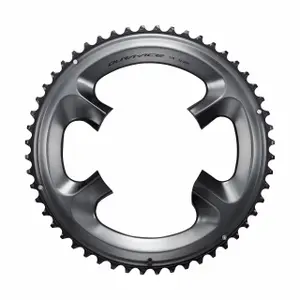
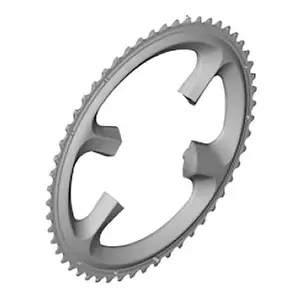
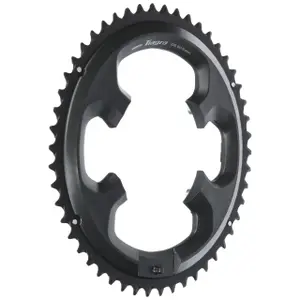
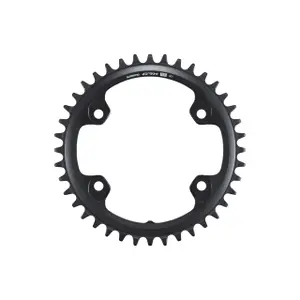
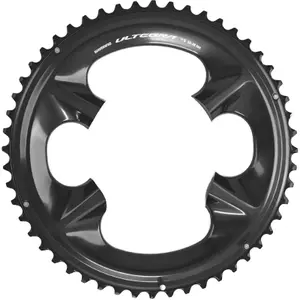
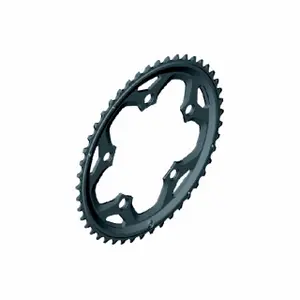
A road bike chainring can be replaced during the Black Friday just like the one you take off: same crankset, same position, same number of gears and the same combination, compact 50/34 or semi-compact 52/36. The Black Friday offers reduced prices on original Shimano and Sram chainrings as well as those from specialist replacement brands, throughout November. Note the reference engraved on your crank before comparing.
Find your crankset chainring
It all starts with the reference engraved on the right crank. Shimano names the original crankset in each chainring: FC-R7000 or FC-R7100 for the 105 in 11 or 12 speeds, FC-R8000 or FC-R8100 for the Ultegra, FC-R9100 or FC-R9200 for the Dura-Ace, FC-RX600 or RX810 for the GRX. A reference followed by P, like FC-R8100-P, refers to the power sensor version, which uses the same chainrings. Specialized brands indicate which cranksets are compatible in their descriptions, with the bolt circle diameter, 110, 130 or 135 mm for example.
Compact, semi-compact: changing combinations
The 50/34 provides shorter gears, useful in the mountains; the 52/36 extends the gearing for maintaining high speeds on flat terrain. On recent four-arm Shimano cranksets, the same crank accepts both combinations: just swap both chainrings, then adjust the height of the front derailleur. Also check the chain length, which must follow a larger chainring. At Sram, AXS cranksets use one-piece double chainrings, like the 50/37, to be replaced as a whole.
Discounted chainrings: compare the same ring
Two discounted chainrings can only be compared if they have the same reference: the crossed-out price of an outer 50-tooth ring doesn’t tell you anything about the inner 34 of the same crankset. Check:
- Position: an outer chainring and an inner chainring of the same crankset cannot be swapped.
- Teeth count: 34, 36 or 39 teeth for the inner, 50, 52 or 53 for the outer, to choose according to the original combination.
- Number of speeds: an 11-speed chainring and a 12-speed chainring from the same group do not have the same ramps.
- Version: with or without power sensor at Sram, round or oval at Stronglight, which changes the reference.
Other pages of road transmission
All year round, road bike chainrings detail bolt circles, combinations and oval chainrings. A new chainring quickly wears out a tired chain, and vice versa: check out the road chains and road cassettes from the operation. For another bike, MTB, urban and all practical chainrings from Black Friday have their page; discontinued series go to clearance.
Road chainring brands in the selection
Shimano sells each chainring of its 105, Ultegra, Dura-Ace and GRX cranksets separately, including those from power sensor versions.
Specialties T.A., a French manufacturer, offers its X110 range for Shimano four-arm cranks, from Tiagra 4700 to Dura-Ace R9200, and triple Alizé for 8 to 10-speed transmissions.
FSA, a Taiwanese manufacturer based in Taichung, supplies replacement chainrings for its Energy, Gossamer, Omega and K-Force cranksets.
Stronglight treats its CT2 chainrings with a ceramic coating infused with Teflon, which is harder and reduces chain friction.
Sram attaches its Red and Force E1 double chainrings directly to the crank, with or without an integrated power sensor.
Miche covers Campagnolo cranksets with a 135 mm bolt circle with its Supertype 9 and 10 speeds, alongside Super11 for Shimano 11 speeds.
Frequently asked questions
50/34 or 52/36?
The 50/34 is suitable for mountainous rides and for cyclists who prefer to spin. The 52/36 is aimed at those who ride fast on flat terrain and tackle hills with strength. Your cassette and terrain matter as much as the chainring.
What cassette with a 50/34 chainring?
An 11-28 or an 11-30 suffices on hilly ground; an 11-32 or an 11-34 makes long climbs easier, provided the rear derailleur can handle them.
Will an 11-speed chainring work on a 12-speed crankset?
It's better to avoid it: ramps and tooth profiles are matched to the chain width of the group. Choose the chainring designed for your crankset and the number of speeds.
When to take advantage of discounts on chainrings for Black Friday?
The Friday of Black Friday follows Thanksgiving Day, a US holiday, and the discounts from Vélo-Store on chainrings cover the entire month of November. Measure the chain before installing chainrings: an elongated chain quickly wears down new teeth.
How to identify the mounting direction of a chainring?
The outer chainring has a nipple or mark that goes behind the crank to prevent the chain from getting stuck between the two. The manufacturer's inscriptions are generally readable on the outer side.